Writing a thesis in Slima

Your notes are immaculate. The chapter still is not written.

It is not your note system. It is that the notes and the draft live in different places, and the writing happens on the road between them.

Why it is hard

Organising notes is not the same activity as writing.

Two years of reading, several hundred cards, and a blank document you still cannot start. The step in between is the one most tools skip.

🔀

Notes over here, draft over there

You switch windows to check one thing, and twenty minutes later you are organising notes again. It feels like work because it is work. It is just not the chapter.

🧷

You cannot find what you already wrote

Which note holds the quotation you used three chapters ago? Finding out means searching two apps and hoping you were consistent about tags.

📝

Nobody can see what changed

Your supervisor wants the difference between this reading and the last one. What you have is thirty copies of one file, most of them called final.

How Slima handles it

Keep the material where the writing happens.

🗂️

One tree

Sources, notes, draft chapters and figures in the same project. Open the material beside the paragraph you are writing instead of alt-tabbing to it.

🔍

The coach has read all of it

Ask how you defined the term back in chapter three and the answer comes from your own documents, not from something on the internet that sounds about right.

Versions that can show the difference

Every save is a version you can return to, and a single file restores without touching the rest. What moved between two readings is something you can lay out.

📤

It leaves with you

Markdown, plain text, Word, PDF, or the whole project as one .slima archive. There is no part of this you cannot walk away from.

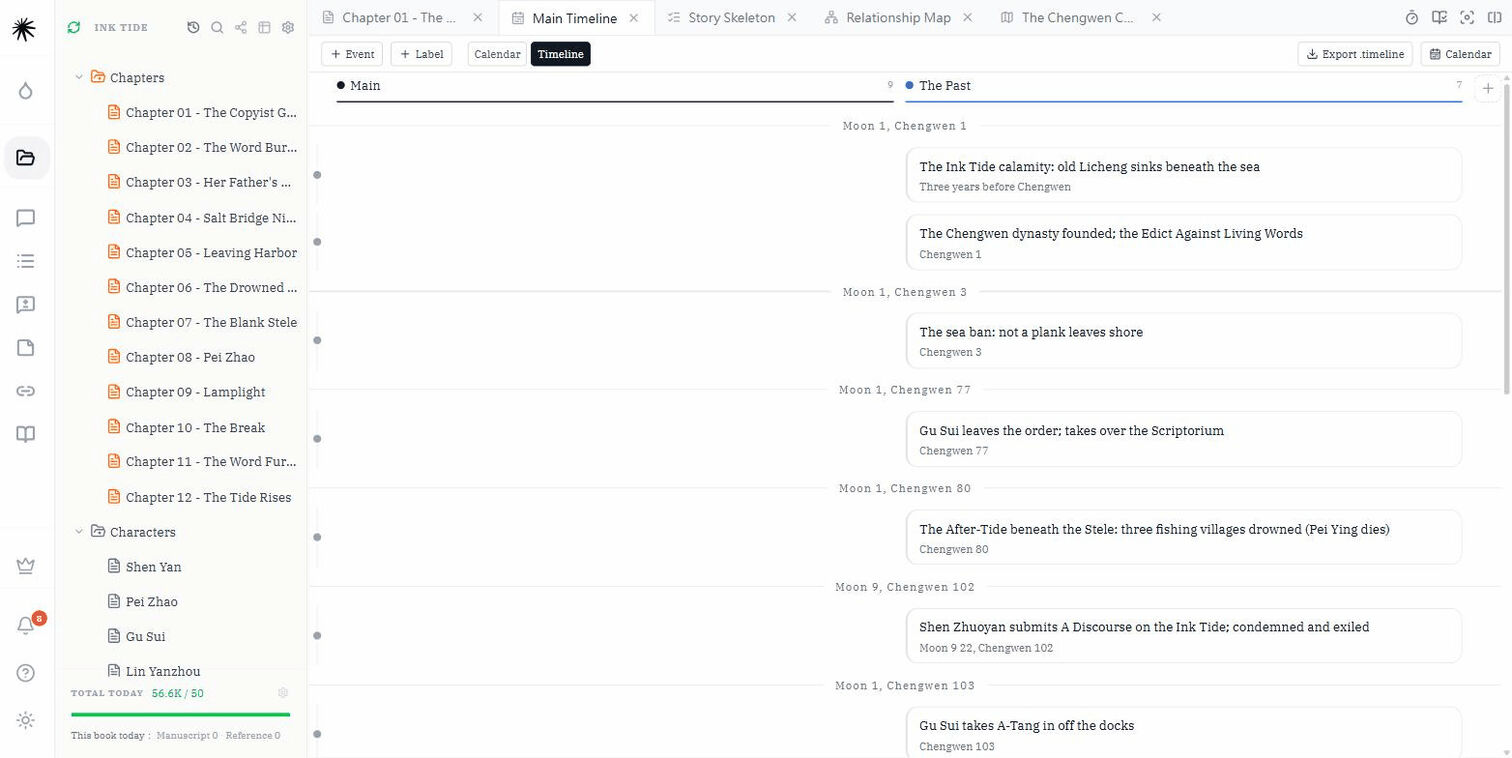
Story timeline: a main lane and a lane for the past, with events laid out by date.
Every event carries its date. What happened in which year is on the screen, not in your head.
Supervision and the viva

The revision history is part of the account you give.

A thesis is read by people who ask when a section was written and how many times it changed. Being able to open the record is a different conversation from remembering roughly. Departments are writing AI use into their own guidance too, and that answer is much easier to give while you are writing than a year after submission.

The writing journey logs what the AI wrote, what was pasted or imported, and every AI consultation, each counted on its own. It is a record of the process, not a judgement about the content.
Move one chapter in and see how it sits.

One book and the whole studio on the free plan. Import a draft you already have and find out what it is like with the sources beside it.