Writing a memoir in Slima
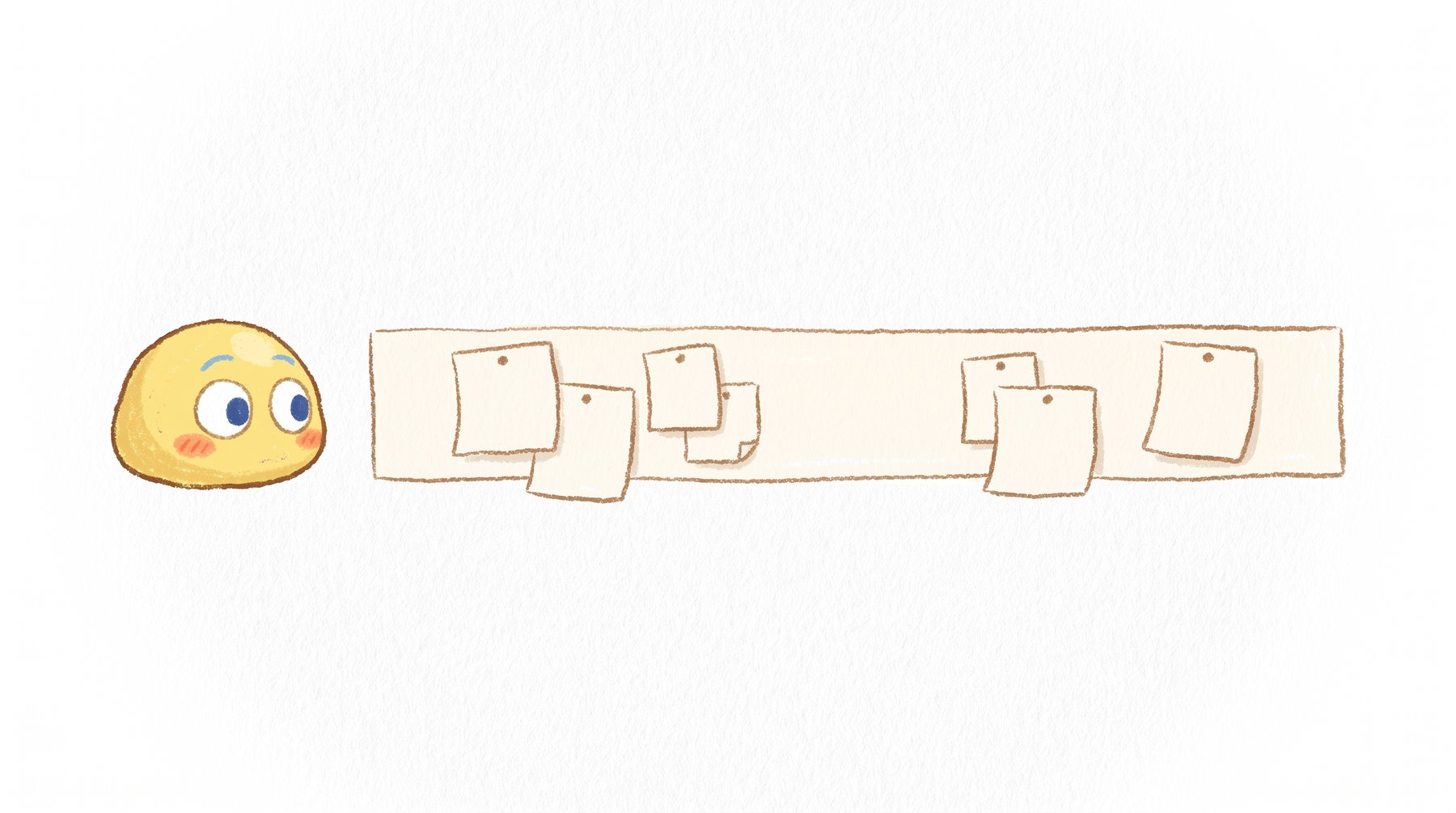
You have the fragments. You do not have the order.
The hard part of a memoir is not remembering. It is that the order things come back in has nothing to do with the order they should be read in.
The hard part of a memoir is not remembering. It is that the order things come back in has nothing to do with the order they should be read in.
What surfaces first is usually the most vivid thing, and the most vivid thing is usually somewhere in the middle. You fill in forwards and backwards from there, and fairly soon you have lost track of what you filled in.
Thirty memories, each of them fine on its own. Read one after another they do not make a road.
What year did your aunt move away, and how was she related to the man in the second chapter? Halfway through the draft you are no longer sure yourself.
Real people are going to read this. Deciding what goes in and what waits is a problem this kind of book has and other kinds do not.
Drag a chapter, a scene or a note onto the axis and it becomes an event. Swimlanes show which stretches a person appears in, and the empty years show up as empty.
The relationship board lays the people out. A relationship has direction and takes a label, and a whole family can be boxed and moved together.
People and places are ordinary files in the same project, and the AI reads them. In chapter ten you can still ask who the man in chapter two was.
Share a draft by link and they can read it and leave comments without an account. Private by default, and your work is never used to train models.
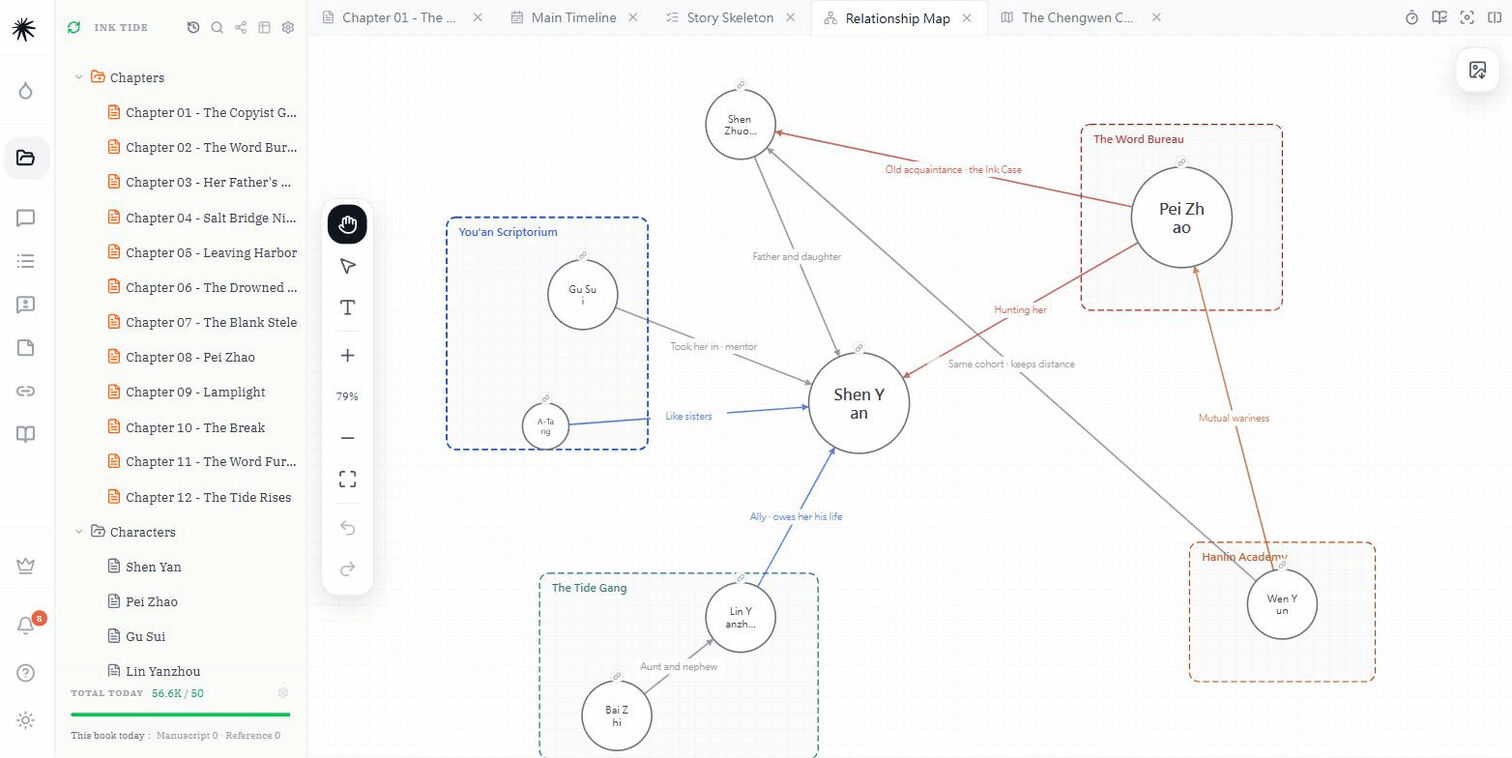
A memoir's first readers are usually family, and family read with their own version open. They will check a date, correct a name, and remember the room differently. The timeline and the relationship board are not only your filing system. They are what you reach for when somebody asks where that came from.
Show it to whoever you choose: a share link is read-only and needs no account at the other end, and the privacy centre lists everything you have made public so you can revoke any of it in one click.
One book and the whole studio on the free plan. Put the ten scenes you can already see onto the timeline, and the order tends to show itself.
Before we count anything
Analytics and advertising cookies stay off until you turn them on. The ones that keep the site working, and the one that remembers this choice, are always on. The detail is in the Privacy Policy.